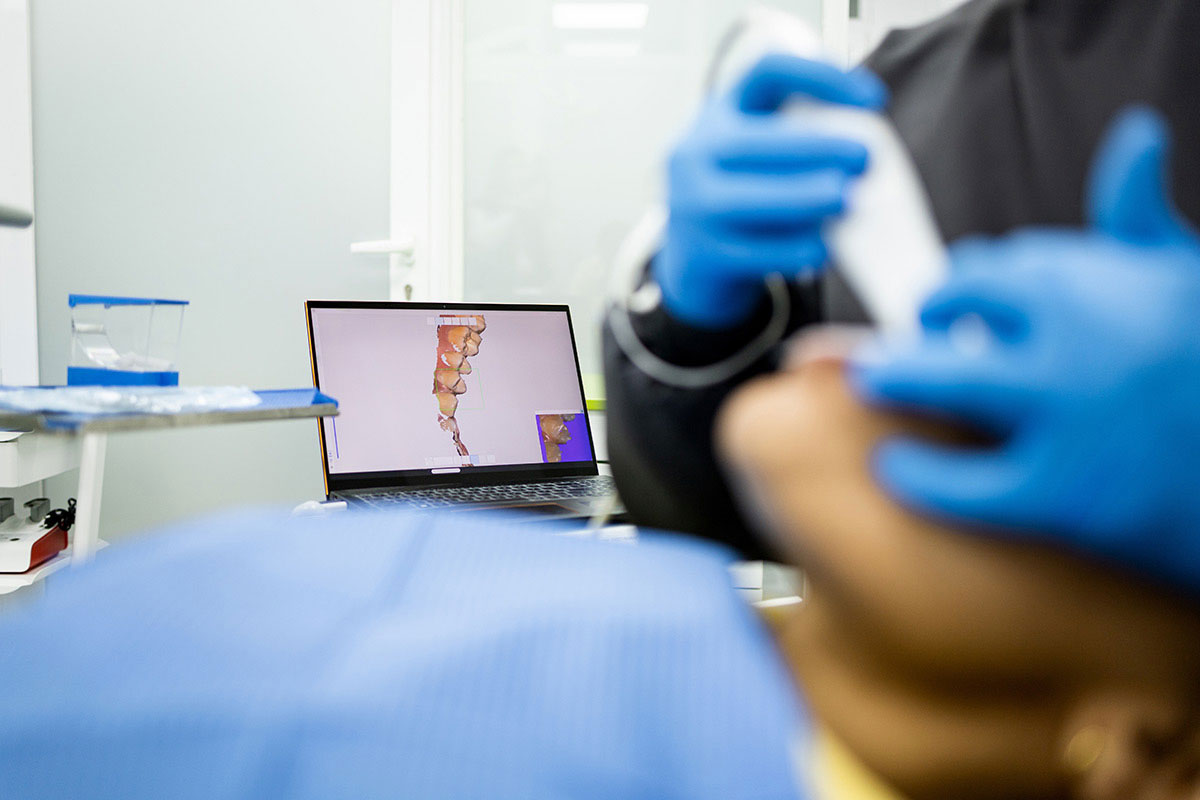
What happens when dental problems are no longer limited to one tooth or one area of the mouth? When several teeth are missing, damaged, worn, or failing at the same time, treating each concern separately may not provide the most coordinated solution. In these situations, a full mouth restoration can bring multiple treatments together under one comprehensive plan.
At Easy Dental Implant Center in West Orange, NJ, full mouth restoration is not one single procedure. Instead, it is a personalized combination of restorative, implant, periodontal, and sometimes cosmetic treatments designed around the health and function of the entire mouth.
You do not need to diagnose yourself before scheduling an evaluation. However, recognizing common signs that a larger treatment plan may be helpful can make it easier to understand when comprehensive care is worth discussing.
What Is a Full Mouth Restoration?
A full mouth restoration, sometimes called full mouth reconstruction, is a coordinated approach to rebuilding or replacing many teeth across the mouth.
The treatment can include dental implants, crowns, bridges, dentures, periodontal care, extractions, and other procedures. The exact combination depends on which teeth can be preserved, which teeth need replacement, the condition of the gums and jawbone, and how the upper and lower teeth come together.
Importantly, full mouth restoration is not simply a cosmetic makeover. Appearance can certainly be part of the plan, but function and oral health are central considerations.
For example, a patient may need to replace several missing teeth, protect weakened teeth with crowns, improve gum health, and correct an unstable bite. Planning these needs together can help the individual treatments work as one larger system.
Sign 1: You Are Missing Several Teeth
One missing tooth can often be addressed with a focused treatment. However, when several teeth are missing in different areas of the mouth, the situation becomes more complex.
Missing teeth can change how chewing forces are distributed. Patients may begin relying heavily on the remaining teeth or avoiding one side of the mouth. Meanwhile, teeth beside open spaces may shift, and opposing teeth may move when they no longer have normal contact.
A full mouth restoration can evaluate all missing areas together. Depending on your needs, replacement options may include individual implants, implant-supported bridges, removable dentures, or full-arch restorations.
The goal is not simply to fill every visible gap. Instead, treatment should restore useful support throughout the bite.
Sign 2: Many Teeth Are Cracked, Decayed, or Heavily Restored
Some patients have a long history of dental treatment. They may have large fillings, older crowns, root canal treated teeth, fractures, or recurring decay in several areas.
When problems develop one at a time, it is easy to enter a cycle of repairing whichever tooth hurts most. Eventually, however, it may be more useful to evaluate the overall condition of the mouth.
A full mouth restoration can identify which teeth have a favorable long-term outlook and which may require a different approach. Some teeth may be protected with new restorations, while others may need extraction and replacement.
By looking at everything together, the dentist can prioritize urgent needs while planning how the final bite should function.
Sign 3: Your Teeth Are Severely Worn Down
Teeth naturally experience some wear over time. However, severe wear can shorten teeth, flatten chewing surfaces, create sensitivity, contribute to cracks, and alter the way the bite comes together.
Grinding and clenching are common causes. Acid exposure can also weaken tooth structure and accelerate wear.
When only one or two teeth are affected, localized treatment may be sufficient. When wear involves many teeth, restoring one area without considering the others can create an uneven result.
A full mouth restoration allows the dentist to evaluate the pattern of wear across the entire mouth. Treatment may include protective restorations, replacement of severely compromised teeth, and strategies to reduce future damage.
Sign 4: Chewing Has Become Difficult or Uncomfortable
Chewing should not require constant planning around painful teeth, loose teeth, or unstable restorations.
If you regularly avoid certain foods, chew almost entirely on one side, or have difficulty breaking food down comfortably, it may be a sign that several areas of the mouth are no longer working together effectively.
Full mouth restoration can address the sources of that difficulty. Missing teeth may need replacement, weakened teeth may need protection, and poorly fitting restorations may need correction.
Because chewing involves both arches at the same time, comprehensive planning can be particularly useful when the problem extends across several sections of the mouth.
Sign 5: Your Bite Feels Uneven or Unstable
Your bite describes how the upper and lower teeth meet. When several teeth are missing, worn, broken, or restored at different times, those contacts can change.
Some teeth may begin absorbing more pressure than others. A patient may notice that one side touches first, certain teeth feel overloaded, or the jaw does not close comfortably.
Not every bite concern requires full mouth restoration. However, when bite problems occur alongside widespread tooth damage or tooth loss, comprehensive treatment planning may be appropriate.
The dentist can evaluate how planned crowns, bridges, implants, and other restorations will work together before treatment is completed.
Sign 6: You Need Several Different Dental Procedures
Perhaps your dentist has mentioned a crown in one area, an implant in another, periodontal treatment elsewhere, and replacement of an older bridge. When multiple treatments are needed, sequencing becomes important.
For example, gum health may need to improve before final restorative work. An extraction site may need healing before implant placement. A temporary restoration may be useful while other areas are being treated.
A full mouth restoration coordinates these procedures into a logical order.
This can make the overall treatment easier to understand because each procedure has a role within a larger plan.
Sign 7: Your Dental Problems Keep Returning
Repeated dental emergencies can be frustrating. One tooth breaks, another becomes painful, an old restoration fails, and the cycle seems to continue.
When recurring problems involve several parts of the mouth, treating only the current emergency may not address the larger pattern.
A comprehensive evaluation can look for contributing factors such as heavy bite forces, untreated gum disease, extensive decay, missing posterior support, or aging restorations.
Full mouth restoration does not guarantee that future dental care will never be needed. However, comprehensive planning can help address multiple known problems rather than constantly reacting to the most recent one.
What Treatments Can Be Part of Full Mouth Restoration?
No two full mouth restoration plans are exactly alike. The procedures are selected according to each patient’s needs.
Dental crowns may strengthen teeth with significant structural damage. Bridges can replace missing teeth in selected situations. Dental implants can support individual crowns, larger bridges, or full-arch restorations.
Some patients need periodontal care to establish healthier gums before restorative treatment. Others may require tooth extraction when a tooth cannot be predictably repaired.
If many teeth are missing, implant-supported dentures or another full-arch option may be considered.
Importantly, the word “full” does not mean every patient receives every procedure. It refers to planning the mouth comprehensively.
The Role of Dental Implants in Full Mouth Restoration
Dental implants can play several roles within full mouth restoration.
An implant may replace one strategically important missing tooth. Several implants may support a bridge. In another patient, implants may provide support for an entire arch of replacement teeth.
Whether implants are appropriate depends on bone availability, gum health, medical considerations, and the design of the final restoration.
Patients should also understand that implant placement is only one part of planning. The final teeth must fit the bite, provide appropriate cleaning access, and work with the remaining natural teeth.
Benefits of Full Mouth Restoration
When comprehensive treatment is appropriate, full mouth restoration may provide several important benefits:
- Coordinated treatment: Multiple dental needs can be planned together rather than handled as unrelated procedures.
- Improved chewing function: Restoring damaged and missing teeth can create more balanced support for eating.
- Protection for remaining teeth: Weakened teeth may be strengthened while missing support is restored elsewhere.
- Improved bite planning: Restorations can be designed to work together across the upper and lower arches.
- Better treatment sequencing: Procedures can be arranged according to healing needs and clinical priorities.
- Personalized solutions: Treatment can combine natural tooth preservation with implant or prosthetic options where appropriate.
- One comprehensive view: Patients can understand how individual procedures fit into a broader oral health plan.
How Is a Full Mouth Restoration Planned?
Planning begins with a detailed examination. Your dentist evaluates each tooth, the gums, jawbone, existing restorations, bite, and areas of tooth loss.
Diagnostic imaging may be needed, particularly if implants or extractions are being considered. Photographs and digital records can also help with restorative planning.
Your medical history, medications, priorities, and treatment preferences are equally important. A technically possible treatment may not be the best choice if it does not fit your health needs or lifestyle.
Once the evaluation is complete, treatment can be divided into phases. Urgent infection or pain may be addressed first. Periodontal health may come next, followed by extractions, implant preparation, restorative procedures, and final adjustments.
Does Full Mouth Restoration Happen All at Once?
Usually, comprehensive treatment is completed in stages.
Some procedures require healing before another treatment can begin. Dental implants, for example, may need time to become stable in the jaw before the final restoration is attached.
Staging treatment also allows the dentist to evaluate how earlier phases are progressing before moving forward.
The total timeline can vary widely. A patient who mainly needs crowns and bridges may have a different schedule than someone who needs extractions, bone preparation, implants, and a full-arch restoration.
Is Full Mouth Restoration the Same as a Smile Makeover?
They can overlap, but they are not necessarily the same.
A smile makeover often focuses primarily on appearance, such as tooth shape, color, proportion, and alignment.
Full mouth restoration is driven by broader restorative needs. Missing teeth, severe wear, broken teeth, unstable bite relationships, and oral disease are typically central to the plan.
Aesthetic considerations still matter because replacement teeth should look natural and fit the patient’s smile. However, health and function remain major priorities.
How Do You Maintain the Results?
Long-term maintenance depends on the treatments used. Natural teeth need brushing, flossing, and regular professional care. Dental implants require careful plaque control around the surrounding tissues.
Patients who grind or clench may need additional protection for their restorations. Likewise, periodontal maintenance may be recommended for patients with a history of gum disease.
Regular visits allow the dentist to monitor crowns, bridges, implants, gums, and bite changes over time.
Discuss Full Mouth Restoration in West Orange, NJ
If dental problems involve many teeth, you do not necessarily have to approach each issue as a separate crisis. A full mouth restoration can provide a coordinated way to evaluate what should be preserved, restored, replaced, and treated first.
Contact Easy Dental Implant Center at (862) 233-7057 to Schedule a Consultation in West Orange, NJ. Our team can evaluate your current oral health and explain whether full mouth restoration or a more focused treatment plan may be appropriate.
Frequently Asked Questions About Full Mouth Restoration
Does full mouth restoration mean removing all of my teeth?
No. A full mouth restoration can include preserving and restoring natural teeth as well as replacing teeth that cannot be saved. Treatment is customized according to the condition of each area.
Can dental implants be part of full mouth restoration?
Yes. Dental implants may be used to replace individual teeth, support bridges, or support larger full-arch restorations when appropriate.
How long does full mouth restoration take?
The timeline varies significantly because treatment may involve several procedures and healing periods. Your dentist can provide a personalized sequence after evaluating your needs.
Is full mouth restoration only cosmetic?
No. Appearance may be considered, but full mouth restoration primarily addresses widespread restorative, functional, and oral health concerns.
Who should consider a full mouth restoration consultation?
Patients with multiple missing teeth, widespread damage, severe wear, repeated dental problems, or several different treatment needs may benefit from a comprehensive evaluation.