When one tooth is missing, should you replace it with an implant or a bridge? Both options can close the gap, restore chewing function, and help maintain a balanced bite. However, they accomplish those goals in different ways. For many patients, understanding how a single tooth implant compares with a traditional dental bridge makes the decision much easier.
At Easy Dental Implant Center in West Orange, NJ, the right choice depends on more than simply filling an empty space. The condition of the neighboring teeth, available jawbone, oral health, treatment timeline, maintenance preferences, and long-term goals can all influence whether a single tooth implant or dental bridge is more appropriate.
What Is a Single Tooth Implant?
A single tooth implant replaces an individual missing tooth without relying on the neighboring teeth for structural support. The treatment generally includes an implant positioned in the jawbone, a connector called an abutment, and a custom crown that forms the visible replacement tooth.
The implant acts as an artificial root. Therefore, the replacement is supported independently rather than being attached to the teeth beside the gap. Once treatment is complete, the goal is to provide a stable tooth replacement that works comfortably within the bite.
A single tooth implant may be considered for a tooth lost because of decay, fracture, trauma, failed dental treatment, or another condition. However, the surrounding bone and gums must also be evaluated before implant placement.
What Is a Traditional Dental Bridge?
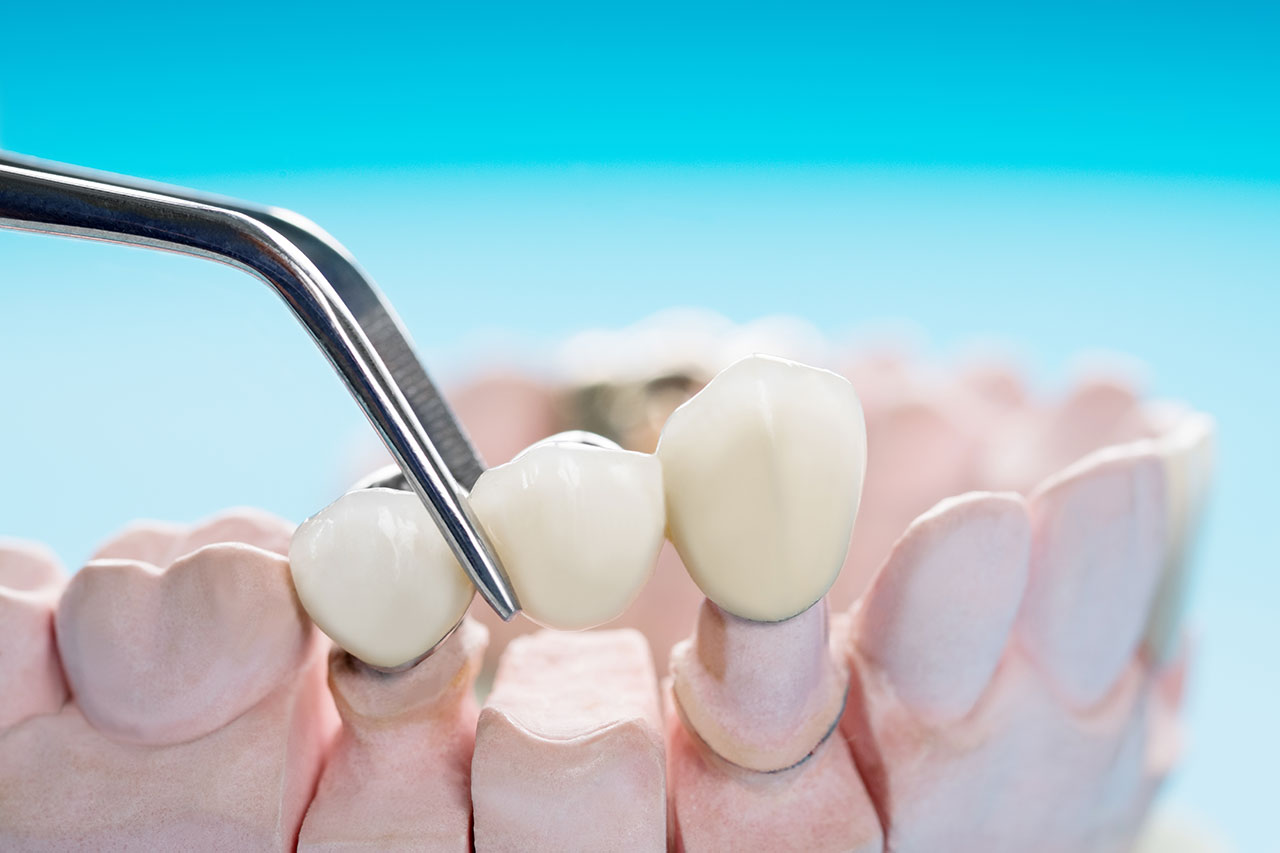
A conventional bridge usually replaces a missing tooth by placing crowns on the teeth on either side of the gap. An artificial tooth is connected between those crowns, creating one restoration that spans the missing-tooth area.
Unlike a single tooth implant, a bridge does not require an implant to be placed in the jaw. Therefore, it can sometimes provide a faster restorative pathway because there is no implant integration period.
However, the neighboring teeth must generally be shaped to support the bridge. This can be a reasonable option when those teeth already need crowns because of large fillings, fractures, or other structural concerns. On the other hand, if both neighboring teeth are healthy and largely untouched, patients may prefer an option that leaves them intact.
How a Single Tooth Implant and Bridge Differ
The biggest structural difference is support. A single tooth implant is supported by the jawbone, while a traditional bridge is supported by neighboring teeth. That distinction affects preparation, maintenance, treatment timing, and how the restoration interacts with the surrounding mouth.
With a bridge, the dentist prepares the supporting teeth for crowns. With a single tooth implant, the adjacent teeth generally do not need to be reshaped simply to support the missing tooth replacement.
In addition, an implant occupies the space where a natural tooth root once existed. A bridge fills the visible gap above the gums but does not place a root replacement within the bone.
Why Preserving Neighboring Teeth Can Matter
If the teeth on both sides of a missing tooth are healthy, conserving their natural structure can be an important consideration. A single tooth implant supports itself, so those neighboring teeth usually do not have to be reduced for bridge crowns.
However, this does not make an implant automatically superior in every case. If a neighboring tooth already requires significant restorative treatment, incorporating it into a bridge may make sense. Therefore, the existing condition of those teeth should be part of the decision.
A comprehensive examination can identify old fillings, cracks, decay, gum problems, or other issues that may not be obvious to the patient. Consequently, choosing between a single tooth implant and a bridge should involve the entire area, not just the empty space.
What About Bone Health?
A single tooth implant transfers functional forces into the jawbone through the implant fixture. Because the implant occupies the missing-root area, it provides a different type of stimulation than a tooth-supported bridge.
However, adequate bone is needed to place an implant. If the tooth has been missing for a long time, the ridge may have changed. In that case, bone grafting might be discussed to improve the implant foundation.
A bridge does not require implant surgery or sufficient bone for an implant fixture. Therefore, it may be considered when implant placement is not appropriate or when a patient prefers a nonsurgical restorative option.
How Does the Treatment Timeline Compare?
A traditional bridge can often be completed without waiting for an implant to integrate with the jawbone. Consequently, the overall treatment schedule may be shorter in straightforward cases.
A single tooth implant generally involves several stages. First, the implant site is evaluated and prepared. If the tooth still needs to be removed, extraction timing must be considered. If bone grafting is needed, that can also influence the schedule.
Next, the implant is placed and allowed to heal. After the implant is stable and ready for restoration, the final crown is created and attached. Although this process can require more time, the result is an independently supported replacement tooth.
Importantly, the exact timeline varies. Some patients can receive an implant soon after extraction, while others benefit from staged healing. Therefore, a personalized schedule is more accurate than a single universal estimate.
Which Option Is Easier to Clean?
Daily cleaning differs between a single tooth implant and a bridge. A single implant crown is separate from the neighboring teeth, so patients can generally floss around it using techniques recommended by their dental team.
A bridge connects multiple teeth together. Because the artificial tooth does not have a natural gap beneath it for traditional flossing, patients need to clean under the bridge with appropriate flossing aids or other recommended tools.
Neither restoration is maintenance-free. Good oral hygiene remains important because the gums, supporting teeth, implant tissues, and surrounding areas can all develop problems if plaque is allowed to accumulate.
Benefits of a Single Tooth Implant
For an appropriate candidate, a single tooth implant offers several advantages worth considering:
- Independent support: The implant replaces the missing tooth without depending on neighboring teeth for structural support.
- Conservation of adjacent teeth: Healthy neighboring teeth generally do not need to be reshaped simply to anchor the replacement tooth.
- Root-level replacement: The implant occupies the missing-root area within the jaw rather than replacing only the visible crown.
- Natural function: A well-planned single tooth implant is designed to work as an individual tooth within the bite.
- Flexible restorative planning: Because the replacement is independent, future treatment needs involving neighboring teeth can often be addressed separately.
- Long-term replacement option: With appropriate care and maintenance, implant treatment is designed as a durable solution for a missing tooth.
When Might a Bridge Be the Better Choice?
A bridge may be a practical solution when the teeth next to the gap already need crowns. In that situation, using those teeth as bridge supports may address multiple restorative needs at once.
A bridge may also be considered for patients who are not candidates for implant surgery or who prefer to avoid an implant procedure. Certain medical, anatomical, financial, or personal factors can influence this choice.
In addition, treatment timing may matter. Because an implant can require a healing period, some patients may prefer an option with a different schedule. However, the fastest solution is not necessarily the best long-term solution for every mouth. Therefore, both immediate and future considerations should be discussed.
When Might a Single Tooth Implant Be Preferred?
A single tooth implant is often appealing when the neighboring teeth are healthy and the patient wants to replace the missing tooth without preparing those teeth for crowns. It may also be attractive to patients who want a standalone restoration rather than a connected group of teeth.
Bone availability, gum health, bite forces, and the space between teeth must still be evaluated. Moreover, the dentist needs to determine whether the planned implant can be positioned in a way that supports the final crown appropriately.
If you have more than one tooth missing, a different strategy may be more efficient. The practice also offers multiple teeth implant treatment for cases involving larger gaps.
What Does a Single Tooth Implant Feel Like?
Once treatment is complete and the area has adapted, the goal is for the replacement tooth to feel stable during everyday chewing and speaking. Because the crown is fixed rather than removable, patients do not need to take it out for routine use.
However, an implant is not identical to a natural tooth. The tissues around it have different anatomy, so proper cleaning and professional maintenance remain essential. In addition, any restoration can experience wear over time, particularly in patients who clench or grind their teeth.
How Should You Make the Decision?
Start by asking what condition the neighboring teeth are in. Then consider whether enough bone is available for a single tooth implant and whether implant surgery fits your health and preferences.
Next, compare maintenance, timeline, and how each option affects surrounding teeth. Cost is also relevant, but it should be considered alongside the design and expected role of each restoration rather than as the only deciding factor.
Finally, ask your dentist to explain why one treatment is recommended for your particular mouth. A useful recommendation should connect the procedure to your anatomy, oral health, bite, and restorative needs.
Replace One Missing Tooth in West Orange, NJ
You do not have to make the single tooth implant versus bridge decision from online information alone. A clinical evaluation can show how much bone is present, whether neighboring teeth need treatment, and which replacement options fit your situation.
If you are missing one tooth, contact Easy Dental Implant Center at (862) 233-7057 to Schedule a Consultation in West Orange, NJ. Our team can evaluate the space and help you compare a single tooth implant with other appropriate tooth-replacement options.
Frequently Asked Questions About Single Tooth Implants
Does a single tooth implant affect the teeth next to it?
A single tooth implant is independently supported, so neighboring teeth generally do not need to be reshaped simply to support the implant crown.
Is a single tooth implant better than a bridge?
Neither treatment is best for every patient. The decision depends on neighboring teeth, bone availability, health, treatment preferences, maintenance, and other individual factors.
Can I get a single tooth implant immediately after an extraction?
Immediate placement is possible in selected cases, but other patients benefit from healing or bone grafting before an implant is placed.
What if I have been missing the tooth for years?
You may still be able to receive a single tooth implant. However, the jawbone should be evaluated because bone volume can change after long-term tooth loss.